
January 3, 2026 / 13 Minute Read
pagan people
Satan’s attempt to counterfeit the prophecy of the virgin birth of the Messiah is at the root of virtually all of the earth’s religions.
Anonymous
During my senior year of college, I attended a world literature class where I had the opportunity to analyze various important religious texts throughout world history.
One of my first assignments was to compare and contrast the creation stories located in Genesis of the Bible and the Enuma Elish of Babylonian folklore.
While there were obvious, stark differences, there were also numerous surprising similarities, such as a divine being creating the world out of darkness and chaos, and a worldwide flood that wipes out most of Earth’s population.
I’d already developed a deep interest in Greek mythology, and I soon realized that the same concepts existed there as well.
This led me to question the origins of religion, specifically paganism, and the potential for a single common source of origin.
Now, after months of research, I think I’ve come to a satisfactory conclusion.
Throughout this article, we’ll be exploring the origins of paganism!
features of the beast
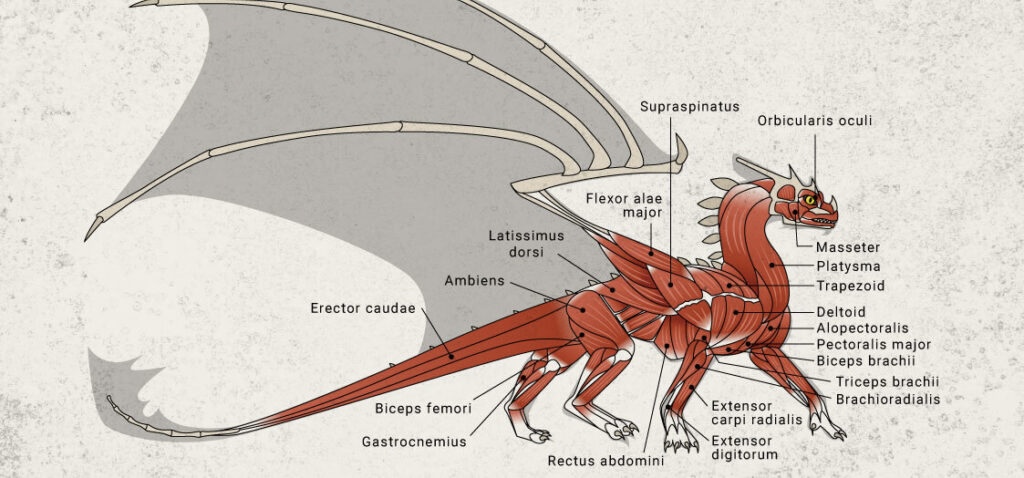
Before we begin, I think it’s prudent to establish an understanding of what paganism entails and its key features.
In short, paganism is a polytheistic religion that worships both the natural world and spiritual entities, often taking the form of gods and goddesses.
There are three key features that separate paganism from the Bible:
Polytheistic
Unlike the Bible, pagan religions are full of various gods and goddesses. Most of these entities are directly correlated with aspects of the natural world, such as fire and water gods like Zeus or Poseidon. There are also many entities connected with more esoteric themes, such as wisdom or war, like Hermes or Ares.
Divine Feminine
All pagan religions worship the divine feminine through the character of the mother goddess. This can be seen through entities such as Isis in Egyptian mythology or Cybele in Greek lore. The masculine and feminine principles are seen as equal, and in some cases, the feminine is exalted over the masculine. This is in stark contrast to the Bible, which describes God, in all three forms, as a masculine entity.
Duality
Pagan religions believe in the concept of duality. Duality states that good and evil are equal but opposite opposing universal forces. This is reflected in pagan/occultic themes such as black and white magic or the right-hand path vs. the left-hand path, challenging the Biblical principle that good (holiness) is stronger than evil (sin).
Now that we have a common definition for paganism and its key features, we can safely travel back in time to where it all (allegedly) started.
the first rebel
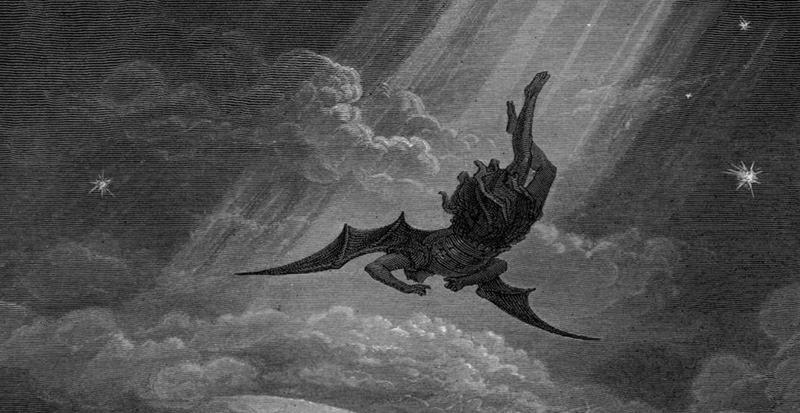
Let’s start with the bad news.
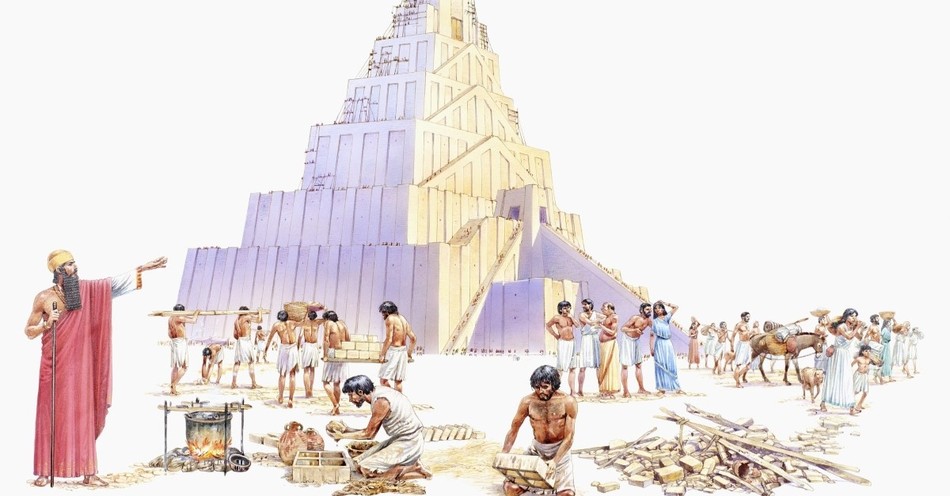
Unfortunately, there is no “official” verified origin of Paganism. However, the most plausible and popular thesis can be found in Jewish mysticism through the legend of Nimrod, in what I like to call the Tower of Babel theory.
Nimrod is briefly mentioned in the Bible as a mighty hunter and the original founder of Babylon.
8 And Cush begat Nimrod: he began to be a mighty one in the earth.
9 He was a mighty hunter before the Lord: wherefore it is said, Even as Nimrod the mighty hunter before the Lord.
10 And the beginning of his kingdom was Babel, and Erech, and Accad, and Calneh, in the land of Shinar.
Genesis 10: 8-10
The Tower of Babel theory, first popularized by Alexander Hislop in his controversial book The Two Babylons, states that Nimrod, along with his wife Semiramis and their son, Tammuz, were the originators of Babylonian paganism and the basis of the pagan trinity of Father God, Mother Goddess, and Divine Child.
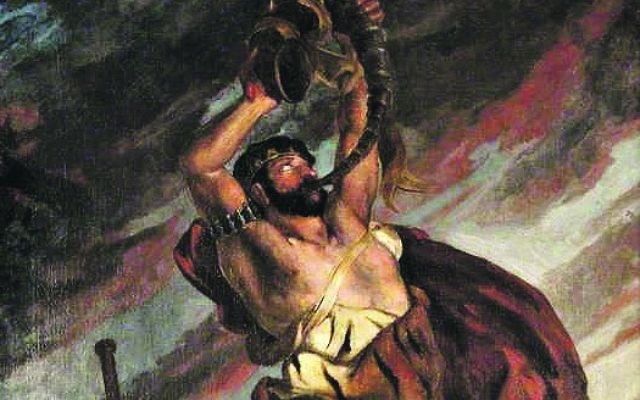
Hislop alleges that after Nimrod’s death, his wife Semiramis claimed divinity, becoming the first mother goddess figure in the post-flood world.
Eventually giving birth to a child whom she claimed was both divine and a reincarnation of Nimrod, they became the foundation of the Mother Goddess/Divine Child archetype and the first attempt to usurp Jesus’ assigned role as the Messiah.
Babylonian religion developed around traditions concerning Nimrod, his wife Semiramis, and her child Tammuz.
When Nimrod died, according to the old stories, his body was cut into pieces, burnt, and sent to various areas. Similar practices are mentioned even in the Bible (Judges 19:29; 1 Sam. 11:7). Following his death, which was greatly mourned by the people of Babylon, his wife Semiramis claimed he was now the sun-god. Later, when she gave birth to a son, she claimed that her son, Tammuz by name, was their hero Nimrod reborn.
The mother of Tammuz had probably heard the prophecy of the coming Messiah to be born of a woman, for this truth was known from the earliest times. She claimed her son was supernaturally conceived and that he was the promised seed, the “savior.”
Babylon Mystery Religion: Pgs. 9-10
The main issue with the Tower of Babel theory is the identity and significance of Nimrod’s family. His alleged wife Semiramis is never mentioned in any of the Biblical texts, and there are no credible documents, books, or research that validate her significance or existence, even from secular sources.
The identity of Nimrod’s son is also questionable, as some sources list his name as Mardon, while others claim he was called Tammuz.
The canon scriptures are surprisingly vague on the details of such a seemingly important figure; however, the Apocrypha provides an intriguing, yet chilling expansion to Nimrod’s story.
44 And Nimrod dwelt in Shinar, and he reigned securely, and he fought with his enemies and he subdued them, and he prospered in all his battles, and his kingdom became very great.
45 And all nations and tongues heard of his fame, and they gathered themselves to him, and they bowed down to the earth, and they brought him offerings, and he became their lord and king, and they all dwelt with him in the city at Shinar, and Nimrod reigned in the earth over all the sons of Noah, and they were all under his power and counsel.
46 And all the earth was of one tongue and words of union, but Nimrod did not go in the ways of the Lord, and he was more wicked than all the men that were before him, from the days of the flood until those days.
47 And he made gods of wood and stone, and he bowed down to them, and he rebelled against the Lord, and taught all his subjects and the people of the earth his wicked ways; and Mardon his son was more wicked than his father.
Book of Jasher 7: 44-47
Despite the ambiguity surrounding Nimrod’s family, the Tower of Babel theory still holds up relatively well if we consider the Apocrypha as a reliable source.
Whether or not Nimrod was married to a woman named Semiramis or if their son was named Tammuz isn’t very important. What matters is the evidence that Nimrod had a son and, by proxy, a woman he procreated with, who may very well have served as cornerstones in his wicked philosophy.

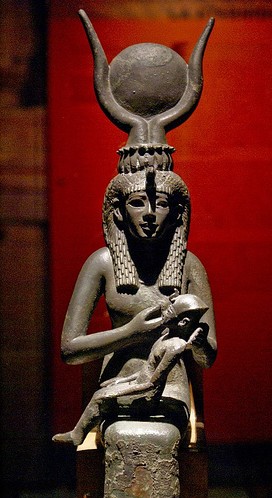
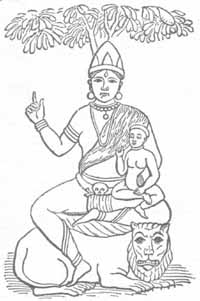
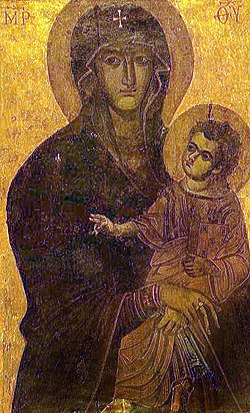
Nimrod’s story in the Book of Jasher not only provides an origin for pagan religions, but also offers greater context as to why God disapproved of the Tower of Babel.
the great migration

When first reading the story of the Tower of Babel, God may surprisingly appear as the villain. If the people were unified, at peace, and working towards one goal, why would God disapprove? Why would he reject a seemingly righteous action?
The only logical explanation for the condemnation of the tower is that Nimrod and his supporters were not building it to worship and glorify God, but instead to challenge and rebel against him. In fact, according to some historians, the name Nimrod itself means rebel!
Now it was Nimrod who excited them to such an affront and contempt of God. He also gradually changed the government into tyranny, seeing no other way of turning men from the fear of God.
The multitudes were very ready to follow the determination of Nimrod and they built a tower, neither sparing any pains, nor being in any degree negligent about the work: and, by reason of the multitude of hands employed in it, it grew very high.The place wherein they built the tower is now called Babylon.
Josephus, Antiquities of the Jews, Bk 1, 4: 2, 3
Nimrod was essentially the world’s first celebrity. The first king deified after the flood, providing a template for subsequent rulers such as Pharaoh and Caesar.
Instead of giving God the glory, he took it for himself, leading to both his personal downfall and the destruction of the physical manifestation of his rebellion.
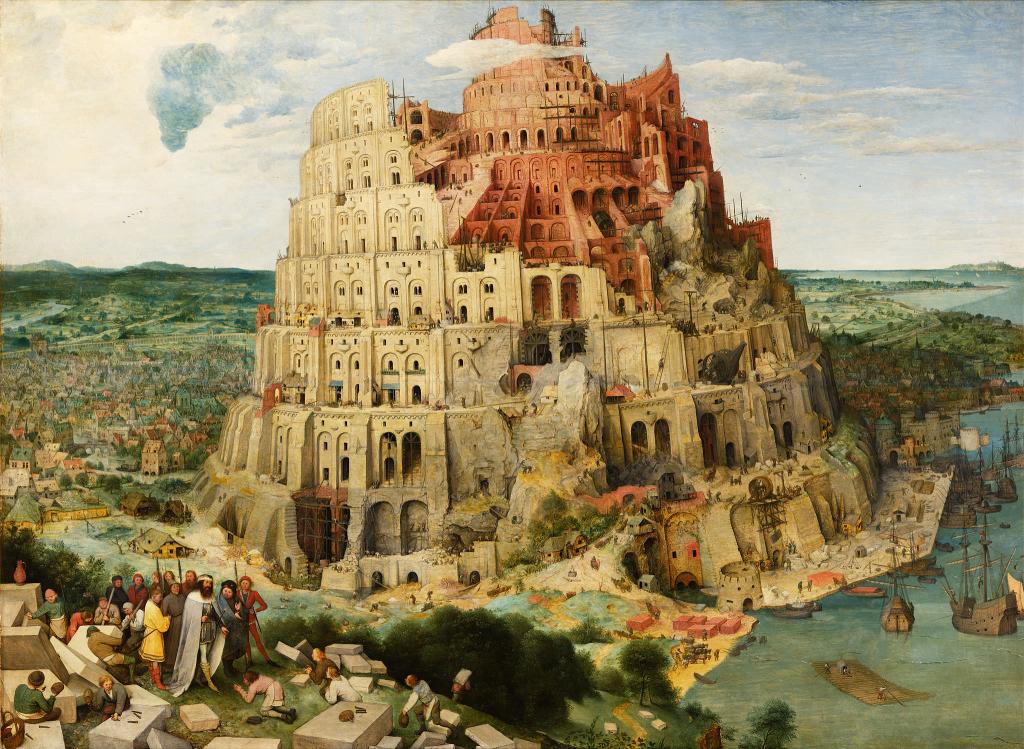
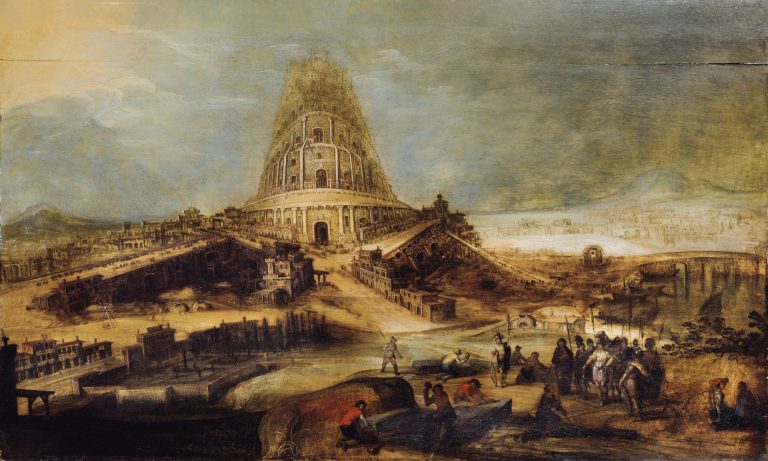
It is well known that after the rebellion at the Tower of Babel was thwarted by God, the people’s languages were confounded, and they soon separated and migrated to the ends of the earth.
It now becomes clear how the demonic seed planted in Babylon grew roots throughout the entire world!
This system of idolatry spread from Babylon to the nations, for it was from this location that men were scattered over the face of the earth (Gen.ll:9). As they went from Babylon, they took their worship of the mother and child, and the various mystery symbols with them.
Herodotus, the world traveler and historian of antiquity, witnessed the mystery religion and its rites in numerous countries and mentions how Babylon was the primeval source from which all systems of idolatry flowed.
Bunsen says that the religious system of Egypt was derived from Asia and “the primitive empire in Babel.” In his noted work Nineveh and its Remains, Layard declares that we have the united testimony of sacred and profane history that idolatry originated in the area of Babylonia.
Babylon Mystery Religion: Pg.10
After the Tower of Babel was destroyed and the people began migrating to different parts of the world, they took Nimrod’s Babylonian religion with them.
This is the reason why the pagan religions are so similar! The names may change, and the legends may vary slightly across cultures, but the overall themes remain the same.
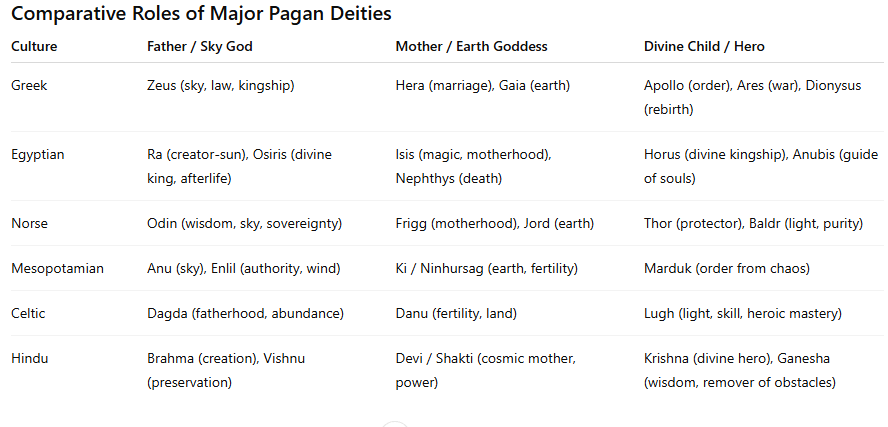
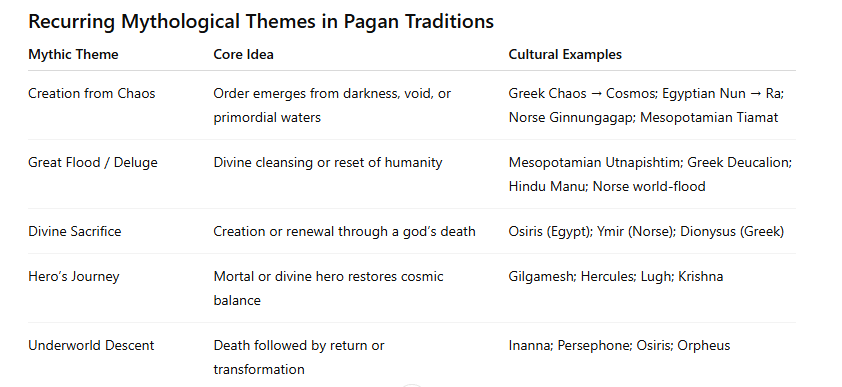
Across geographically isolated pagan cultures, remarkably consistent mythic structures emerge—suggesting not coincidence, but a shared symbolic language through which early societies explained creation, destruction, and renewal.
While we must remember to maintain a level of respect and awareness for the idiosyncrasies of the various pagan religions, we must also consider the larger implication that, despite the surface-level differences, these cultures operate through a single spirit with a unified goal.
return of the beast

Though paganism may appear to be a relic of the past, its spirit is still alive and well in our current world.
In fact, it’s seeing a stark and alarming resurgence.
Paganism largely went underground during the 4th-7th centuries due to factors such as the Christianization of the Roman Empire and social/political pressure. It’s practitioners were forced to worship in secret, communicating only through symbol and ritual.
Alas, due to various contemporary social engineering events such as the Age of Enlightenment and the Counter Culture Movement of the 1960s, the beast threatens to return in its full, depraved glory.
One of the most surprising events of the twenty-first century has been the reemergence of ancient pagan ideas and traditions in Western nations once considered “Christian.”
As part of this global trend, Iceland has constructed its first temple in over 1,000 years to worship the old Nordic gods Thor and Odin. In England, thousands gather at Stonehenge on the summer solstice to greet the rising sun—as ancient pagans once did.
In Edinburgh, Scotland, performers painted as red devils entertain crowds to celebrate the ancient Celtic Fire Festivals of Beltane and Samhain, while many gather at ancient U.K. sites to burn a wicker man—as Druids once did. In America, thousands travel to Burning Man festivals, catering to uninhibited behavior resembling old pagan practices.
In Greece, Hellenists are promoting the worship of the ancient deities Zeus, Apollo, and Athena, while at the Getty Museum in Los Angeles, children write prayers to Aphrodite or Venus, the Greco-Roman goddess of love and lust—and patron goddess of prostitutes. In Eastern Europe, people celebrate ancient fertility rites by dancing around and jumping over fires, customs from a pre-Christian past.
In Russia, church leaders note with concern the growing interest in pagan traditions. In America, the fastest-growing religion is witchcraft, and statues promoting satanism appear on public grounds. The U.S. Air Force Academy has even constructed a pagan chapel.
Via: The Rise of Modern Paganism
Every day, the kingdom of darkness grows stronger as people increasingly and continuously submit to Luciferian principles and ideologies.
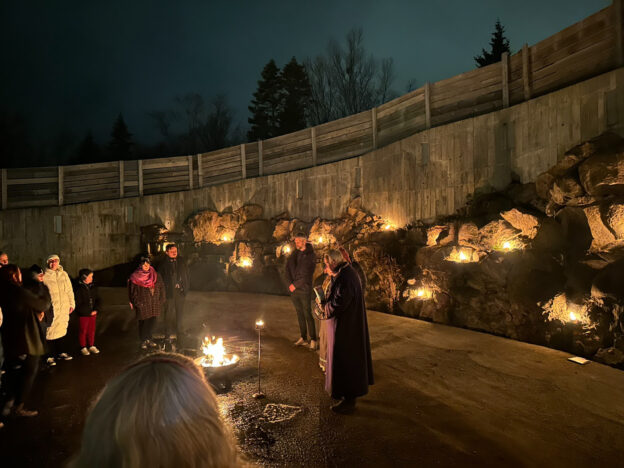

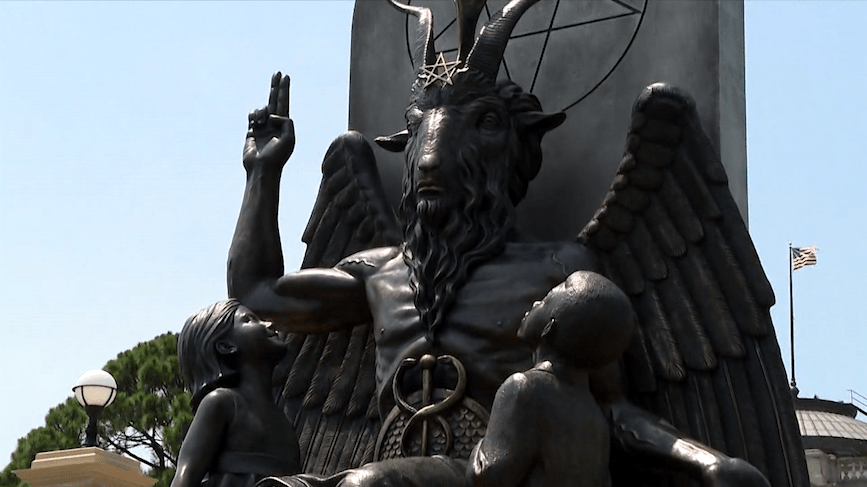

With paganism on the rise and the return of the beast looming on the horizon, it is now more important than ever to establish a solid foundation in Christ.
Just as the pagans worship and work to appease their gods of wood and stone, so too should the children of Israel have the same zealous attitude for Christ!
To end, remember these key takeaways:
- All pagan religions have three distinguishing characteristics: They’re all polytheistic, they all worship the divine feminine, and they all believe in the concept of duality.
- There is no definitive origin of paganism; however, the most plausible theory, popularized by Alexander Hislop, lists Nimrod’s Babylonian kingdom as the most likely source.
- The great migration after the destruction of the Tower of Babel explains why pagan religions from around the world share such similar characters, stories, and themes. They all (allegedly) come from a single source!
- Paganism has exponentially grown in popularity and practitioners in recent decades.
Bye Chance!
references
Alexander Hislop. The Two Babylons. Forgotten Books Biblioteca Digital UCSH.
Daniels, Mark. World Mythology in Bite-Sized Chunks. Michael O’Mara Books Ltd, 2016.
Smith, Huston. The World’s Religions: Our Great Wisdom Traditions (2nd Edition). HarperSanFrancisco, 1991.
Woodrow, Ralph. Babylon Mystery Religion: Ancient and Modern. R. Woodrow, 1993.
Woodrow, Ralph. The Babylon Connection? Ralph Woodrow, 1997.
https://sacred-texts.com/chr/apo/jasher/7.htm
https://www.gotquestions.org/Nimrod-in-the-Bible.html
https://www.gotquestions.org/who-Semiramis.html
https://www.tomorrowsworld.org/magazines/2019/november-december/the-rise-of-modern-paganism
https://edinburgh.org/event/beltane-fire-festival/
https://thenewamerican.com/us/culture/faith-and-morals/air-force-academy-builds-pagan-chapel/
https://www.ebsco.com/research-starters/literature-and-writing/tower-babel-biblical-story
https://www.hermetic-academy.com/black-and-white-magic/
https://www.learnreligions.com/left-hand-and-right-hand-paths-95827
 by chance