
March 23, 2024 / 10 Minute Read
the not so federal reserve
One who increases his possessions by usury or extortion gathers it for him who will pity the poor.
Proverbs 28:8
In Funny Money Vol.1 we discussed the history of money, culminating in the revelation that the world’s current economy is based on fiat currency, or in simple terms: Fake money. This phantom cash is being sanctioned by the banking cartel known as the Federal Reserve.
The question is why?
Why would the federal reserve adopt a banking system that has a history of destroying the economy, as well as its citizens?
Throughout this article, we will be exploring the history of the Federal Reserve and the devastating effects it’s had on the world.
meeting of the minds

Before we answer the how, I believe it’s important to address the who.
A brief history of the founding of the Federal Reserve will show that the Fed is not so federal after all. In fact, several attendees were associated with the European banking system, showing that despite the title, the Fed is in fact a globalist institution.
It all started with a meeting of the minds at Jekyll Island:
The basic plan for the Federal Reserve System was drafted at a secret meeting held in November of 1910 at the private resort of J.P. Morgan on Jekyll Island off the coast of Georgia. Those who attended represented the great financial institutions of Wall Street and, indirectly, Europe as well.
The seven men who attended the secret meeting on Jekyll Island represented an estimated one-fourth of the total wealth of the entire world.
The reason for secrecy was simple. Had it been known that rival factions of the banking community had joined together, the public would have been alerted to the possibility that the bankers were plotting an agreement in restraint of trade—which, of course, is exactly what they were doing.
The Creature from Jekyll Island: Pg 23,24
We see here that the Federal Reserve is not a government institution, but instead a private entity controlled by the world’s elite.
Since it’s inception the Federal Reserve has been operated by international bankers, implicating world domination as opposed to national.
So how do they plan on doing it?
By enthralling nations using two systems: The Rothschild Formula and the Mandrake Mechanism.
the mandrake mechanism
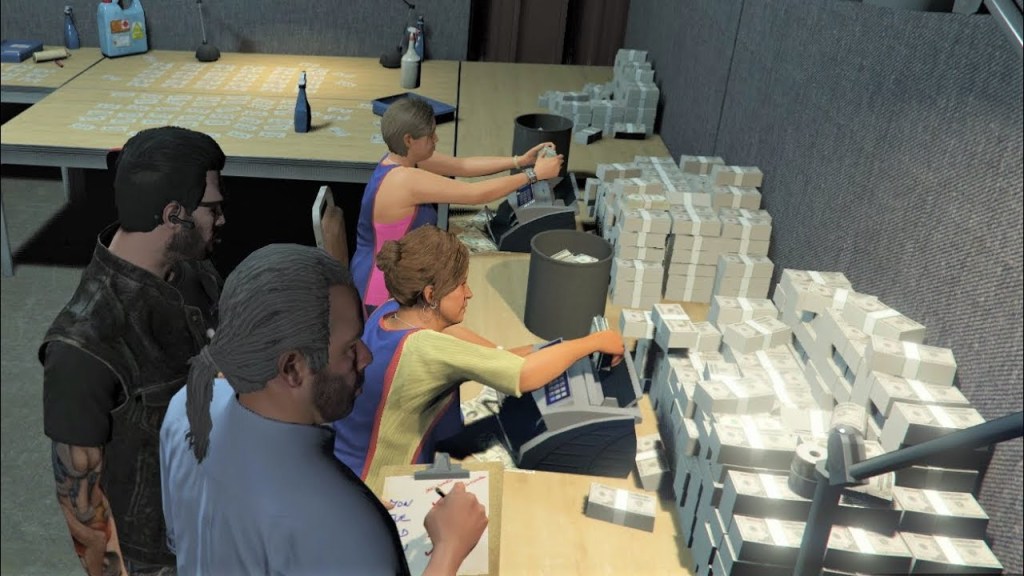
When banks extend loans to their customers, they create money by crediting their customers’ accounts.
Sir Mervyn King: Governor of the Bank of England (2003-2013)
The mandrake mechanism, or money multiplier effect is a method that banks use to create money out of nothing.
Yes, you heard that right. Banks create money out of thin air!
The entire function of the Mandrake Mechanism is to convert debt into money. It’s just that simple. First, the Fed takes all the government bonds which the public does not buy and writes a check to Congress in exchange for them. There is no money to back up this check. These fiat dollars are created on the spot for that purpose.
By calling those bonds “reserves,” the Fed then uses them as the base for creating 9 additional dollars for every dollar created for the bonds themselves. The money created for the bonds is spent by the government, whereas the money created on top of those bonds is the source of all the bank loans made to the nation’s businesses and individuals.
The result of this process is the same as creating money on a printing press, but the illusion is based on an accounting trick rather than a printing trick.
The bottom line is that Congress and the banking cartel have entered into a partnership in which the cartel has the privilege of collecting interest on money which it creates out of nothing, a perpetual override on every American dollar that exists in the world. Congress, on the other hand, has access to unlimited funding without having to tell the voters their taxes are being raised through the process of inflation. If you understand this paragraph, you understand the Federal Reserve System.
The Creature from Jekyll Island: Pg. 193
I know that was a little hard to understand (especially for me) so let me try to break it down.
Essentially, through fractional reserve banking laws and fiat money, banks create money out of nothing by making loans. They then charge interest on these loans which is how the banks make money.
This is known as usury.
Fractional reserve laws state that banks can create $9 extra for every $1 they have. I know that makes no sense, but that’s the Fed for you. This artificially increases the money supply, lowering the value of the dollar and leading to inflation.
This is why the prices of housing, gas, and basically everything else has increased so dramatically throughout the past century.
The essence of the contemporary monetary system was the creation of money, out of nothing, by private banks’ often foolish lending.
Martin Wolf: Independent Banking Commission Member
Think about it like this.
Say you borrow money from a loan shark. You’re now in debt and have a responsibility to pay that person back. As long as you’re in debt, you’re basically a slave, subject to the whims of the lender.
Debt is how the Fed makes puppets.
the rothschild formula

Let me issue and control a nation’s money and I care not who writes the laws.
Mayer Amschel Rothschild
War.
What is it good for, absolutely nothing!
Unless you’re the Fed.
An expose of the Rothschilds could be an entire series itself, so I won’t bore you with the details (at least not in this article). Just understand that they played a key role in the founding of the Fed, and in the process, implemented the family tradition of starting wars for profit.
War is and always has been big business, and continues to be one of the main methods used by the Fed to gain control over nations.
Although often called bankers, those who financed wars in the pre-capitalist period … were not bankers in the modern sense of the word. Unlike modern bankers who operate with money deposited with them by their clients [or, in more recent times, created out of nothing by a central bank—E.G.], they generally worked with the fortune which they themselves had amassed or inherited, and which they lent at a high rate of interest.
Thus those who risked the financing of a war were for the most part already very rich, and this was the case down to the seventeenth century. When they agreed to finance a war, these rich lenders did not, however, always attach great importance to the rate of interest, instead securing for themselves privileges which could be turned into industrial or commercial profit, such as mining concessions, monopolies of sale or importation, etc.
The Creature from Jekyll Island: Pg. 218
Bankers finance wars for two reasons: To put countries into debt and gain access to their resources.
As we saw from the above snippet, aside from the interest accrued on loans, bankers also use war to gain access to precious resources like oil and gold mines.
You know, capital and consumer goods that actually have value.
In the first paragraph it states that most of the bankers who financed early wars did so out of their own pocket.
I want you to really think about that.
There are people on this planet who are so rich that they can literally support entire countries!
Imagine if these people pooled their resources with the intent of world domination…
Next we’ll evaluate five principles that explain how and why the Fed facilitates war:
1. War is the ultimate discipline to any government. If it can successfully meet the challenge of war, it will survive. If it cannot, it will perish. All else is secondary. The sanctity of its laws, the prosperity of its citizens, and the solvency of its treasury will be quickly sacrificed by any government in its primal act of self-survival.
2. All that is necessary, therefore, to insure that a government will maintain or expand its debt is to involve it in war or the threat of war. The greater the threat and the more destructive the war, the greater the need for debt.
3. To involve a country in war or the threat of war, it will be necessary for it to have enemies with credible military might. If such enemies already exist, all the better. If they exist but lack military strength, it will be necessary to provide them the money to build their war machine. If an enemy does not exist at all, then it will be necessary to create one by financing the rise of a hostile regime.
4. The ultimate obstacle is a government which declines to finance its wars through debt. Although this seldom happens, when it does, it will be necessary to encourage internal political opposition, insurrection, or revolution to replace that government with one that is more compliant to our will. The assassination of heads of state could play an important role in this process.
5. No nation can be allowed to remain militarily stronger than its adversaries, for that could lead to peace and a reduction of debt. To accomplish this balance of power, it may be necessary to finance both sides of the conflict. Unless one of the combatants is hostile to our interests and, therefore, must be destroyed, neither side should be allowed a decisive victory or defeat. While we must always proclaim the virtues of peace, the unspoken objective is perpetual war.
The Creature from Jekyll Island: Pg. 230
This is why we see examples of American business tycoons like Ford who supplied both the Americans and Germans in WW2.
This is why so many politicians and public figures have found themselves at the end of a barrel.
Wars are not fought for patriotism or nobility. Not anymore. They are fought for money. Plain and simple. The Fed has perpetuated the war machine for decades, exchanging human lives for profit. As long as it continues to exist, wars will continue to be big business.
another look at the fed

The American dollar has no intrinsic value. It is a classic example of fiat money with no limit to the quantity that can be produced. Its primary value lies in the willingness of people to accept it and, to that end, legal tender laws require them to do so.
It is true that our money is created out of nothing, but it is more accurate to say that it is based upon debt. In one sense, therefore, our money is created out of less than nothing.
Under the present system, therefore, our leaders cannot allow a serious reduction in either the national or consumer debt. Charging interest on pretended loans is usury, and that has become institutionalized under the Federal Reserve System.
The Creature from Jekyll Island: Pg. 207
Do you get it now?
Do you understand how we are being betrayed and bamboozled all the way from the top?
So what can we do?
How can we fix the mess that the Federal Reserve has created?
Find out in the next edition of Funny Money.
Bye Chance.
references
Griffin, G. Edward. The Creature from Jekyll Island: A Second Look at the Federal Reserve. American Media, 2010.
https://www.youtube.com/watch?v=a-Bo_45d7Bw
 by chance