April 26, 2023 / 6 Minute Read
follow the muse
What is a muse?
A muse for an artist is the spark.
The inspiration.
The reason for creating.
But what if the muse is evil?
What if the muse is a wolf in sheep’s clothing?
What if the seemingly angelic muse is actually a demon?
Throughout this article we will be exploring the history of the demonic entities known as the Muses.
malevolent muses
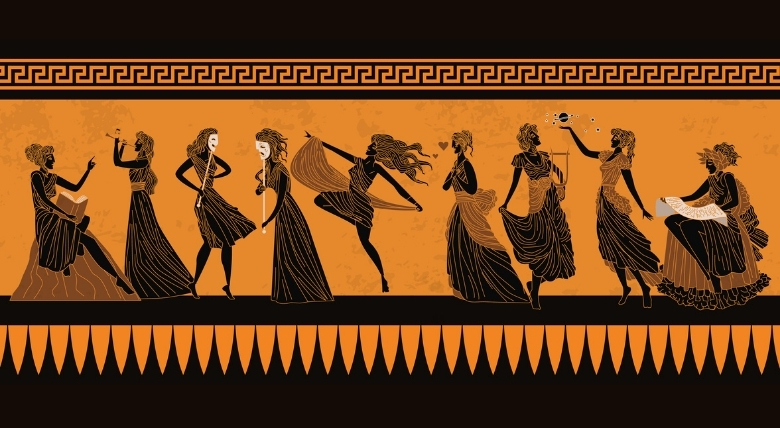
In Greek mythology, the nine Muses are goddesses of the various arts such as music, dance, and poetry. Blessed with wonderful artistic talents, they also possess great beauty, grace, and allure. Their gifts of song, dance, and joy helped the gods and mankind to forget their troubles and inspired musicians and writers to reach ever greater artistic and intellectual heights.
The Muses are the daughters of Zeus and the Titan Mnemosyne (Memory). The nine muses are:
Via: https://www.worldhistory.org/muse/
- Calliope (Epic poetry and also rhetoric)
- Clio (History)
- Erato (Singing)
- Euterpe (Lyric Poetry)
- Melpomene (Tragedy)
- Polymnia (Hymns to the gods and heroes)
- Terpsichore or Stesichore (Dance)
- Thalia (Comedy),
- Urania (Astronomy)
The Muses were a family of alleged, “divine” beings, that served as ghostwriters for many of the greatest artistic creations throughout history.
However, based on our research, we know that all of the ancient gods and goddess of ancient mythology are false idols and manifestations of the wicked one.

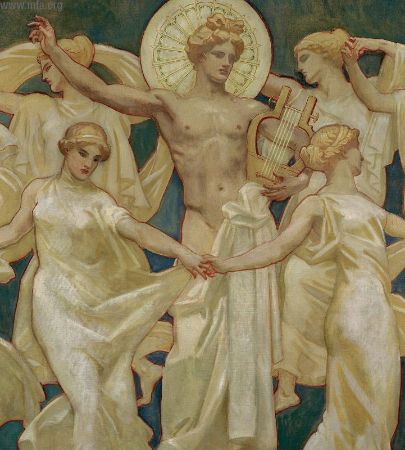
Notice how the Muses were always associated with Zeus/Apollo, both of which are simply different names for Satan.
APOLLYON. The Greek name, meaning “Destroyer,” given in Revelation 9:11 for “the angel of the bottomless pit” (in Hebrew called Abaddon), also identified as the king of the demonic “locusts” described in Revelation 9:3-10.
In one manuscript, instead of Apollyon the text reads “Apollo,” the Greek god of death and pestilence as well as of the sun, music, poetry, crops and herds, and medicine.
Via: https://juchre.org/nor/apollyon.htm
To put it simply, Zeus/Apollo represent Satan, while the Muses represent his demons.
the price of greatness

Pietro Pucci uses the Muses’ words, “We know how to say many false things that seem like true sayings, but we know also how to speak the truth when we wish to” (Th.27) ) as a frame for reading the entire text as presenting the paradoxes involved in gifts from the gods and goddesses (1-44).
Via: https://digitalcommons.unf.edu/cgi/viewcontent.cgi?article=1080&context=etd
Many Greek philosophers, including Socrates and Plato, spoke extensively about the Muses, and the role they play in the lives of artists. Plato specifically seemed to understand the true intent of the Muses, and frequently expressed his distrust of these demonic entities throughout his work.
The Muses are a present force in poetic life in Plato’s writings, even if a disturbing one which leads to madness. Plato writes extensively about creative inspiration and is less trusting of this influence as a positive force than are the poets.
Many of our current stereotypes of creative people are consistent with the following depiction in Plato’s Phaedrus:
There is a third form of possession or madness, of which the Muses are the source. This seizes a tender, virgin soul and stimulates it to rapt, passionate expression, especially in lyric poetry, glorifying in countless mighty deeds of ancient times for the instruction of posterity. But if any man come to the gates of poetry without the madness of the Muses, persuaded that skill alone will make him a good poet, then shall he and his works of sanity with him be brought to naught by the poetry of madness, and behold, their place is nowhere to be found. (245)
In this passage, Plato sees poetic inspiration as a sort of mental instability, but as a necessary evil for creating lasting works of literary art. The lyric poets are possessed by a demon of creativity.
Via: https://digitalcommons.unf.edu/cgi/viewcontent.cgi?article=1080&context=etd
A demon of creativity huh?
While I agree with Plato’s assertion that invocation of the Muses leads to madness, I disagree with his statement that the works of sane people will not be remembered.
That is a lie they feed you in the entertainment industry.
They tell you that you’re not good enough.
That you won’t be famous until you invoke the Muses and allow them to posses you.
They coheres artists into exchanging their sanity for creativity.


Surprisingly, the Muses are actually where we get the word “music” from:
The word “music” originates from the Greek word mousike, which originally denoted any of the nine Muses governing arts.
Via: https://brainly.com/question/1369295
The Muses are the reason we see so many artists, especially musicians, start off pure and innocent, only to descend into insanity as their careers progress. This is the cost of falling under the possession of the Muses.
Why do you think so many artists suffer from mental health issues?
modern muses
The Muses began their lives as nymphs that manifested as whispers in the ears of those that invoked them.
The Muses were integral to the artistic development of ancient Greece. The poets attempted to summon the Muses, who they believed would respond by giving them inspiration for their work. The ancient Greeks worshiped the Muses until Christianity became the dominant religion in Europe.
Via: https://greekreporter.com/2023/04/25/cleopatra-antony-samos-ancient-greece/
Notice that artists communicate with muses by summoning or invoking them. Demons are the only entities that can be summoned, and they always require a steep price for their services.
Depictions of the Muses can frequently be seen throughout modern pop culture.
I wanted to present some examples of the Muses in modern media to show just how pervasive this concept truly is.
hunter x hunter

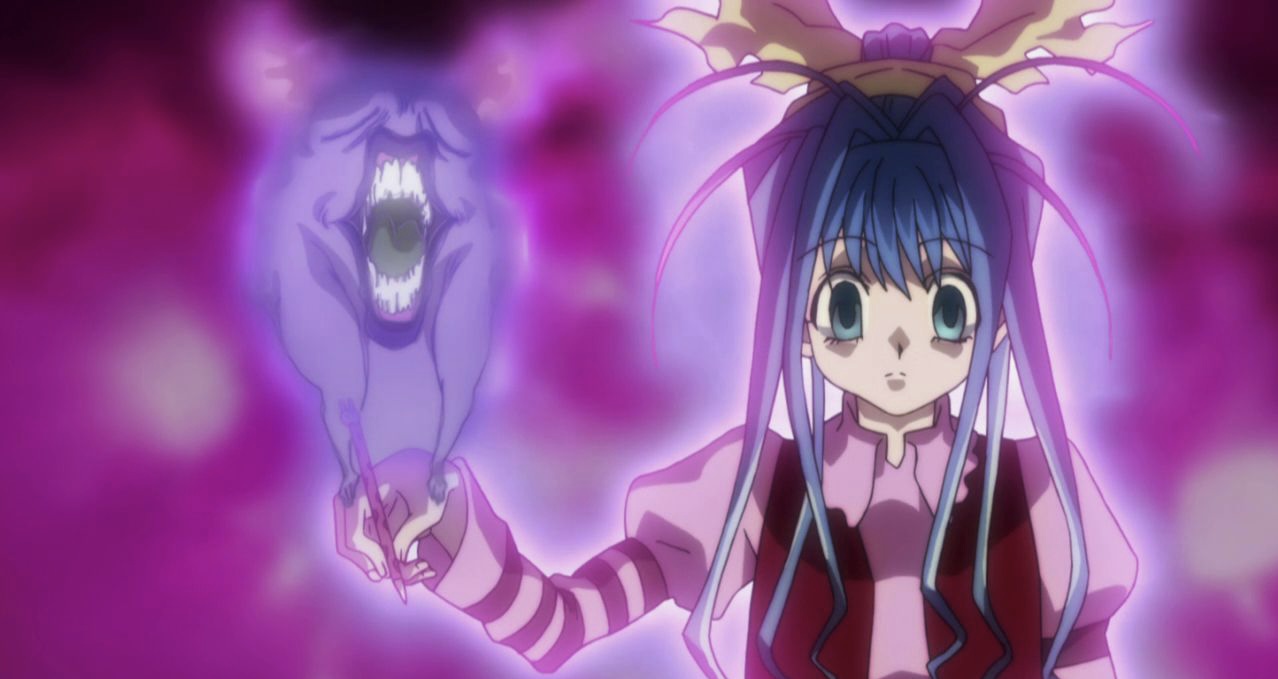
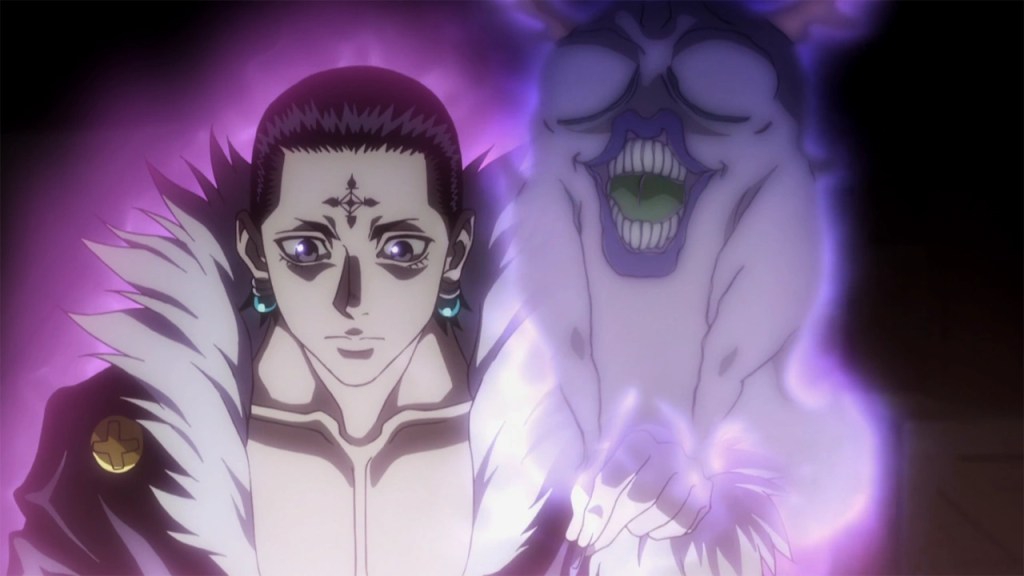
A great example of the demonic Muse can be seen in the show Hunter X Hunter through the character of Neon. In the anime, Neon is an eerily accurate fortune teller.
But where does she get these fortunes from?


That demonic entity sitting on her shoulder is a Muse. Again, the Muses essentially serves as ghostwriters for famous musicians, fortunetellers, and writers.
candyman
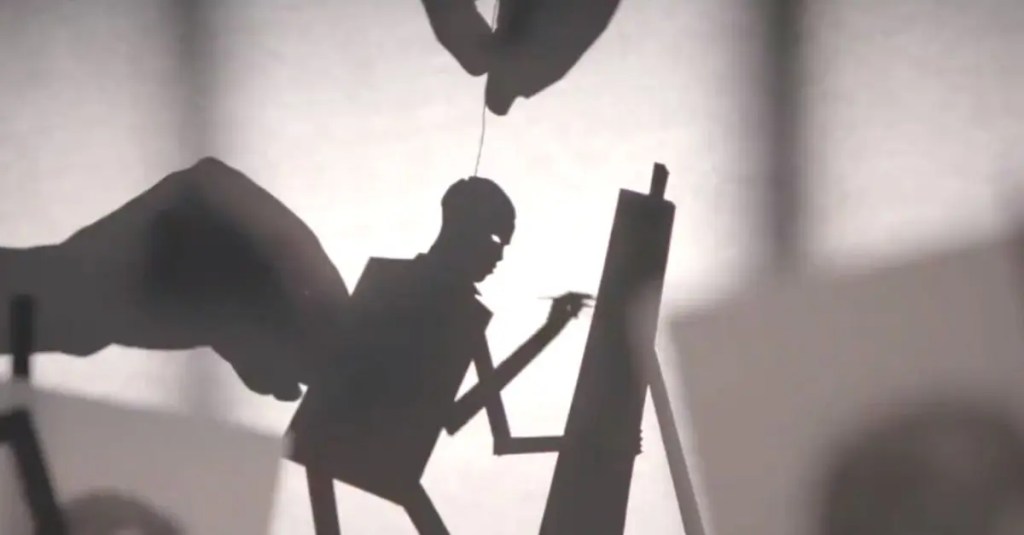
Candyman adds further credence to Plato’s theory that utilizing the Muses leads to madness. At the beginning of the film, we see our main character Anthony as a struggling, yet talented artist.
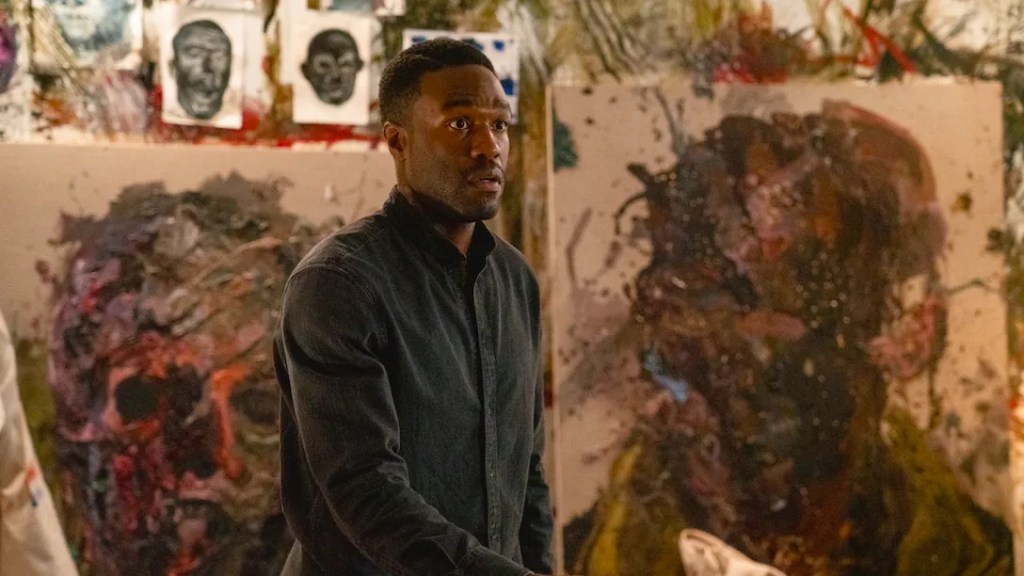

Later in the film, Anthony is possessed by the demonic Muse known as Candyman, and we see his art, and sanity, take a sinister turn.
it’s a trap
I understand young artist.
At one point, I was addicted to drugs.
Addicted to the Muses.
I felt like they brought out the best in me. As if they unlocked parts of my brain that I didn’t even know existed.
Maybe I still do…
Like Anakin Skywalker, I was beguiled by the siren call of the demonic Muses.
That’s the trick.
They make you feel like you need them…like you need their intoxicating potions to produce good art.
Dear artist,
Your content, your soul, your art, is a gift from God.
You don’t need any substances or evil spirits to validate or inspire your work.
You are perfectly and wonderfully made.
If your worried about the fame and glory.
If your worried about your work lasting forever in this temporary world…
Ask yourself…
Are you truly an artist?
Bye chance.
references
https://digitalcommons.unf.edu/cgi/viewcontent.cgi?article=1080&context=etd
https://www.worldhistory.org/muse/
https://greekreporter.com/2023/04/25/cleopatra-antony-samos-ancient-greece/
 by chance