
October 24, 2022 / 9 Minute Read
demon days
There shall not be found among you anyone…who uses divination, one who practices witchcraft, or one who interprets omens, or a sorcerer, or one who casts a spell, or a medium, or a spiritist, or one who calls up the dead. For whoever does these things is detestable to the Lord.
Deuteronomy 18:10-13
For this article, I’m going to skip my usual artsy introductions and get straight to the point.
Halloween is CLEARLY a demonic holiday, and it’s really not debatable.
Throughout this article we will explore the occultic origins of Halloween, proving once again that nearly all contemporary holidays are in reality, demon days…
samhain

If any of you have played Assassins Creed Valhalla, you should be vaguely familiar with the Celts and Druids. The Celtics were an ancient pagan nation located in Central and Western Europe, and like all pagan nations, they were ruled by a group of demonic priests; aka witches.

It is through the Celts and their shamanic overlords that we find the origin of Halloween, rooted in a pagan festival called Samhain (pronounced sow-win).
Halloween is one of the oldest holidays in the world. The spooky day associated with trick-or-treating and costumes originates from Samhain, a three-day ancient Celtic pagan festival.
In the Celtic culture, which dates back as early as 1200 B.C.E., Samhain was a celebration that marked the end of the summer and kicked off the Celtic new year. The new year signaled a time of death and rebirth, which was symbolic of the end of a bountiful harvest season and the beginning of a dark winter.
During the three-day celebration, it was believed that the barrier between humans and otherworldly spirits was broken. In the presence of otherworldly spirits, the Celts believed that priests could make accurate predictions about the future. During the festival, the Celts played tricks and pranks on one another and blamed them on mischievous fairies and spirits. Sacrifices of animals and crops were performed to appease Celtic deities. At the sacrificial bonfires, the Celts wore costumes, typically made from animal skins and heads, and attempted to read each other’s fortunes.
Via: https://sites.imsa.edu/acronym/2020/10/22/the-pagan-origins-of-halloween/
trick-or-treat?

The tradition of costumes and trick-or-treating all originate from the understanding of the Halloween season as a liminal period.
A liminal period is a time where the spirit world and physical world merge, allowing various demonic forces to manifest.
As already noted, Halloween was thought to be a night when mischievous and evil spirits roamed freely. As in modern poltergeist lore, mischievous spirits could play tricks on the living—so it was advantageous to “hide” from them by wearing costumes. Masks and costumes were worn to either scare away the ghosts or to keep from being recognized by them.
Halloween masks and costumes were used to hide one’s attendance at pagan festivals or—as in traditional shamanism and other forms of animism—to change the personality of the wearer to allow for communication with the spirit world. Here, costumes could be worn to ward off evil spirits. On the other hand, the costume wearer might use a mask to try to attract and absorb the power of the animal represented by the mask and costume worn. According to this scenario, Halloween costumes may have originated with the Celtic Druid ceremonial participants, who wore animal heads and skins to acquire the strength of a particular animal.
Via: https://www1.cbn.com/the-pagan-roots-of-halloween
There is much debate around the origins of trick-or-treating, but generally there are three theories:
The first theory suggests that during Samhain, Celtic people would leave food out to appease the spirits traveling the Earth at night. Over time, people began to dress as these unearthly beings in exchange for similar offerings of food and drink.
The second theory speculates that the candy boon stems from the Scottish practice of guising, which is a secular version of “souling.” During the Middle Ages, generally children and poor adults would collect food and money from local homes in return for prayers for the dead on All Souls’ Day. Guisers dropped the prayers in favor of non-religious practices with the inclusion of songs, jokes, and other “tricks.”
A third theory argues that modern American trick-or-treating stems from “belsnickeling,” a German-American Christmas tradition where children would dress in costume and then call on their neighbors to see if the adults could guess the identities of the disguised. In one version of the practice, the children were rewarded with food or other treats if no one could identify them.
Via: https://blogs.loc.gov/headlinesandheroes/2021/10/the-origins-of-halloween-traditions/
Personally my money is on the first theory, but regardless of the origin; the energy behind the practice remains consistent.
When children wear costumes and go scavenging for candy, they are literally embodying and invoking demonic entities, serving as physical representations of tormented spirits.
days of the dead
The liminal period of October 31st through November 2nd were, and still are extremely important in pagan circles.
This is why we see this time period being celebrated by different cultures around the world, yet retaining the same rituals and themes.
The Day of the Dead
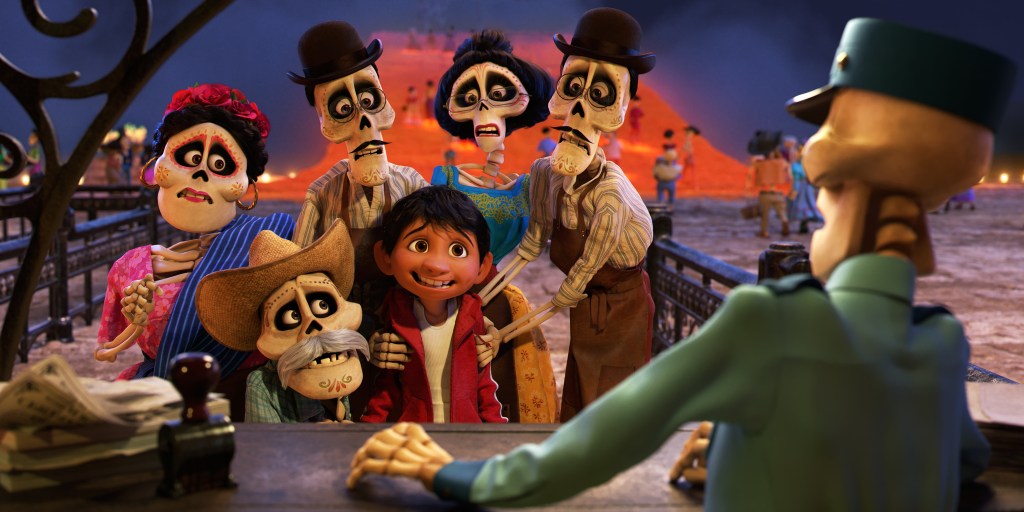
If you took Spanish class at some point in your academic career, or have any understanding of Mesoamerican culture, you should be familiar with The Day of the Dead.
The Day of the Dead (el Día de los Muertos), is a Mexican holiday where families welcome back the souls of their deceased relatives for a brief reunion that includes food, drink and celebration. A blend of Mesoamerican ritual, European religion and Spanish culture, the holiday is celebrated each year from October 31-November 2. While October 31 is Halloween, November 2 is All Souls Day or the Day of the Dead. According to tradition, the gates of heaven are opened at midnight on October 31 and the spirits of children can rejoin their families for 24 hours. The spirits of adults can do the same on November 2.
On the Day of the Dead, it’s believed that the border between the spirit world and the real world dissolve. During this brief period, the souls of the dead awaken and return to the living world to feast, drink, dance and play music with their loved ones. In turn, the living family members treat the deceased as honored guests in their celebrations, and leave the deceased’s favorite foods and other offerings at gravesites or on the ofrendas built in their homes.
Via: https://www.history.com/topics/halloween/day-of-the-dead
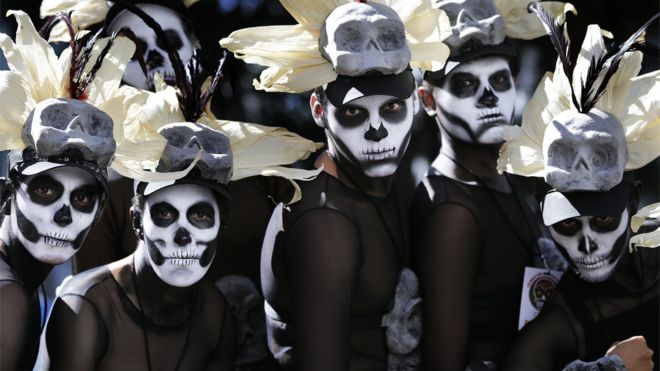

Is it all by chance?
Or is the Day of the Dead another example of the Halloween season having a deep spiritual significance throughout all pagan cultures of the world?
The Diwali
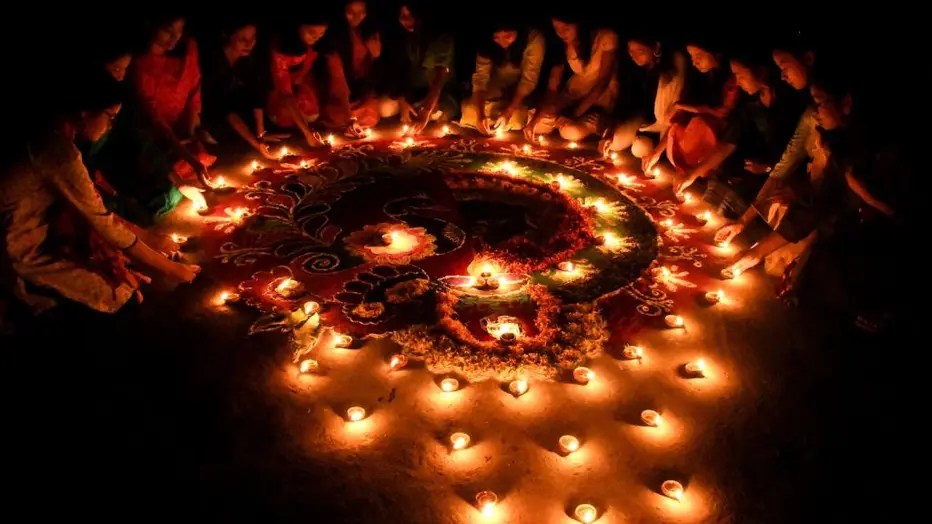
The Hindu Diwali (Divali, Deepavali) occurs about the same time as Samhain. Diwali marks the Hindu New Year just as Samhain marks the Celtic New Year.
Diwali (also called Divali or Deepavali) is a “festival of lights” that celebrates the triumph of light over dark and good over evil, and the blessings of victory, freedom, and enlightenment.
Diwali occurs annually in autumn during the Hindu month of Kartik. (To put it in Western terms, Kartik begins around mid-October and ends in mid-November.) Specifically, Diwali occurs on the darkest day of the lunar month, which is the day of the new Moon.
Via: https://www.almanac.com/content/diwali
| Year | Date of Diwali |
| 2022 | Monday, October 24 |
| 2023 | Sunday, November 12 |
| 2024 | Friday, November 1 |
| 2025 | Monday, October 20 |
Could it be that Diwali and Samhain have a common root in antiquity?
All-Saints/All-Souls day
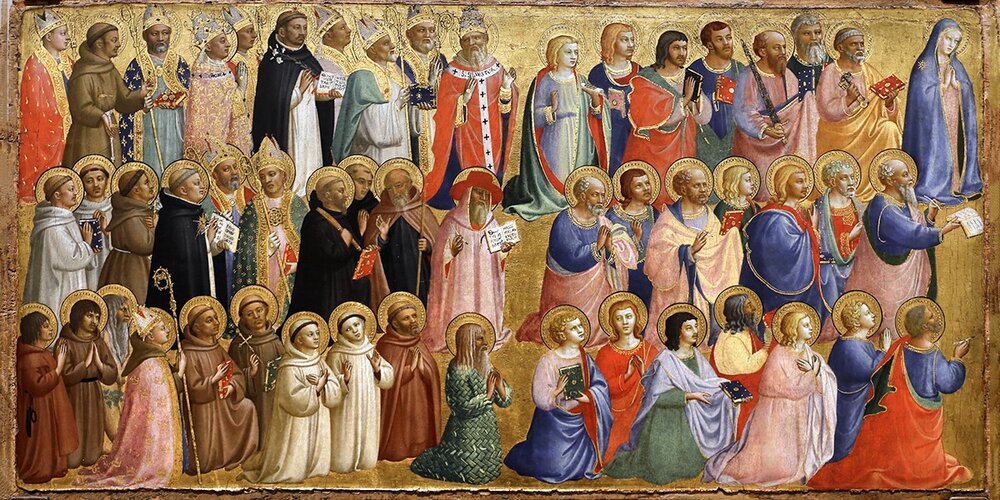
As Christianity gained a foothold in pagan communities, church leaders attempted to reframe Samhain as a Christian celebration.
These manifested in the modern day traditions of All-Saints day and All-Souls day celebrated on November 1st and 2nd.
Neither new holiday did away with the pagan aspects of the celebration.
The Samhain festival remained unchanged until the Roman Empire invaded the Celtic territories in 43 A.D. Then, Samhain was reframed as a Christian celebration in an attempt to capitalize on the festival’s popularity, helping to spread Christianity.
On May 13, 609 C.E., Pope Boniface IV announced a new celebration called All-Saint’s Day, or All-Hallow’s/Hallowmas. All-Saint’s Day was celebrated similarly to Samhain; bonfires were held and people dressed up in costumes reflecting the otherworldly.
Via: https://sites.imsa.edu/acronym/2020/10/22/the-pagan-origins-of-halloween/
Notice that All-Saint’s Day was originally celebrated in May.
Yet, by chance; the celebration was moved to November 1st…perfectly coinciding with Samhain.
In the mid-eighth century, Pope Gregory strategically moved the celebration to November 1, coinciding with the time Samhain would have typically been held. The homage paid to martyrs and saints who passed closely paralleled the appeasement of ghosts of the dead during Samhain.
The church’s capitalization on Samhain traditions didn’t end there, however; The pagan-turned-Christian practices of dressing up in costume, playing pranks and handing out offerings have evolved into popular traditions even for those who may not believe in otherworldly spirits or saints. However, whether Halloween celebrants know it or not, they’re following the legacy of the ancient Celts.
Via: https://time.com/5434659/halloween-pagan-origins-in-samhain/
Believe it or not, the Catholic Church is actually filled with witches and satanists.
This is why they embrace so many pagan holidays and anti-biblical rituals.
be a light

This holiday is the most important day of the year, for wiccans, satanists, and occultists. Many unsuspecting kids are literally walking into witch covens, taking cursed candy, and embodying demonic entities.
This holiday is anti-biblical and one of the most overt examples of how the entire world has been fooled into worshiping satan.
While Halloween is undoubtedly demonic, I don’t believe in spreading fear and condemnation. I believe in spreading awareness and knowledge. You can do whatever you want on this day, but I personally believe there are far more effective ways to worship The Most High than wearing demonic costumes and scavenging for candy.
I’m going to spend this time doing exactly what I’m doing now. Spreading information, and trying my hardest to bear my cross and lead people to Christ.
Whatever you decide to do on this day, make sure you’re glorifying God.
To end remember these key points:
- The earliest origins of Halloween date back to the ancient druid festival of Samhain. Samhain was the origin for most of the Halloween customs we follow today, including costumes and trick-or-treating.
- The period of October 31st – November 2nd is a time of increased spiritual activity known as a liminal period. Pagans believe that a liminal period occurs when the spirit and physical world merge, allowing various demonic entities to manifest.
- Various pagan cultures around the world celebrate this time period with the same rituals and themes, proving that Halloween is not Christian in origin, but is in fact rooted in witchcraft, sorcery, and paganism.
bye chance.
references
https://www.almanac.com/content/diwali
https://www.newgrange.com/samhain.htm
https://www.history.com/topics/holidays/samhain
https://sites.imsa.edu/acronym/2020/10/22/the-pagan-origins-of-halloween/
https://historyforatheists.com/2021/10/is-halloween-pagan/
https://www1.cbn.com/the-pagan-roots-of-halloween
https://blogs.loc.gov/headlinesandheroes/2021/10/the-origins-of-halloween-traditions/
https://www.history.com/topics/halloween/day-of-the-dead#sources
 by chance