December 27, 2021 / 12 Minute Read
santa or satan?
I wanted to write this article, not to tell you what to do, but to prevent you from falling for a lie. Many people have erroneously come to associate the modern holiday of Christmas with the birth of the biblical Christ.
And this is where the problem lies…
Christmas has absolutely NOTHING to do with Jesus.
In fact, Christmas was celebrated long before Jesus was even born!
So where did this fallacious association of Jesus and Christmas come from? And why is it Important?
Throughout this article, we will be evaluating the satanic origins of everyone’s favorite holiday…
Christmas.
the winter solstice
To begin, I want to reiterate that Christmas is NOT the celebration of the birthday of Jesus, but is actually the established birthday of his arch-enemy. The Bible NEVER explicitly mentions Jesus’ birthday, but the common consensus among biblical scholars is that he was born sometime in the spring.
Many Christians attempt to justify Christmas by asserting that the Annunciation of Christ came exactly 9 months before Christmas on March 25.
This is a lie.
Once again, the Bible NEVER explicitly mentions the date of the Annunciation. The date was literally only established to falsely justify Christmas!
The Annunciation also ties into the belief of worshiping the mother goddess in paganism. This is where the Catholic tradition of worshipping Mary comes from, which isn’t biblical, but a pagan belief in the worship of feminine energy.
Originally a feast of our Lord, but now celebrated as a Marian feast (in honor of Mary), the feast of the Annunciation dates back at least to the fifth century.
The Annunciation, as much as or even more so than Christmas, represents Christ’s incarnation. When Mary signaled to Gabriel her acceptance of God’s Will, Christ was conceived in her womb through the power of the Holy Spirit.
The date of the feast, which is determined by the date of Christmas, is nine months prior to Christmas. This date was set by the seventh century.
Via: Scott P. Richert
Notice the date of the feast was not established until the seventh century A.D.
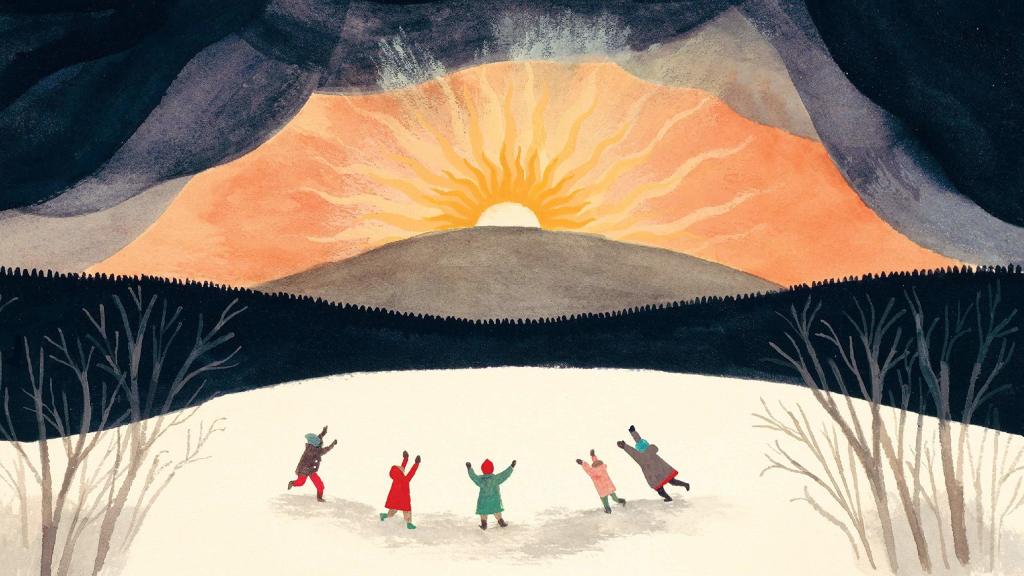
In reality, Christmas is just the celebration of the Winter Solstice.
The Winter Solstice is an extremely important holiday in pagan cultures, as it commemorates the rebirth of their supreme deity, and is basically the pagan version of Jesus’ resurrection.
“The Winter Solstice is the day with the shortest daylight hours in the year. It is also known as the “longest night”. In the Northern hemisphere the Winter Solstice happens around the 21st of December every year. After the Winter Solstice, the daylight hours gradually get longer and the hours of darkness at night get shorter until the Summer Solstice. The pagans saw the Winter Solstice as a turning point in the year, marking the start of the regrowth of plants and crops as the sun returns. It was a time to celebrate farming, nature, and life over death.
Many ancient pagan cultures hosted festivals to celebrate the Winter Solstice. This included the Celts, the Norse, the Inca, and even back as far as early humans in the Stone Age.“
Via: https://www.imagininghistory.co.uk/post/ancient-origins-of-the-christmas-tree
One of the main ideologies in pagan cultures is astrology, and a common theme among them is the worship of the celestial bodies as divine figures. The ancients felt the cycles of nature and the celestial bodies mirrored the stories of their various gods and heroes.
For example, the Greeks viewed Hercules as a sun god because his twelve trials mirrored the twelve annual cycles of the sun.
pagan origins
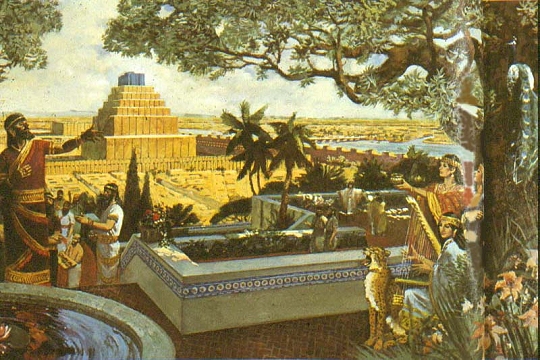
The earliest recorded traditions of Christmas date back to ancient Babylon. If you don’t know who Nimrod was, he was basically the first antichrist figure after The Flood of Noah, and was responsible for the reinvigoration of the pagan belief systems that God wanted to destroy.
Two key figures in the origin of Christmas are Nimrod, a great grandson of Noah, and his mother and wife, Semiramis, also known as Ishtar and Isis. Nimrod, known in Egypt as Osiris, was the founder of the first world empire at Babel, later known as Babylon (Genesis 10:8-12; 11:1-9). From ancient sources such as the “Epic of Gilgamesh” and records unearthed by archeologists from long-ruined Mesopotamian and Egyptian cities, we can reconstruct subsequent events.
After Nimrod’s death (c. 2167 BC), Semiramis promoted the belief that he was a god. She claimed that she saw a full-grown evergreen tree spring out of the roots of a dead tree stump, symbolizing the springing forth of new life for Nimrod. On the anniversary of his birth, she said, Nimrod would visit the evergreen tree and leave gifts under it. His birthday fell on the winter solstice at the end of December.
A few years later, Semiramis bore a son, Horus or Gilgamesh. She declared that she had been visited by the spirit of Nimrod, who left her pregnant with the boy. Horus, she maintained, was Nimrod reincarnated. With a father, mother, and son deified, a deceptive, perverted trinity was formed.
Semiramis and Horus were worshipped as “Madonna and child.” As the generations passed, they were worshipped under other names in different countries and languages. Many of these are recognizable: Fortuna and Jupiter in Rome; Aphrodite and Adonis in Greece; and Ashtoreth/Astarte and Molech/Baal in Canaan.
During the time between Babel and Christ, pagans developed the belief that the days grew shorter in early winter because their sun-god was leaving them. When they saw the length of the day increasing, they celebrated by riotous, unrestrained feasting and orgies. This celebration, known as Saturnalia, was named after Saturn, another name for Nimrod.
Via: Martin G Collins in “Syncretismas.”
Notice how Nimrod, aka the sun god, was symbolized by an evergreen tree. Notice how the tradition of gift giving was present in ancient Babylon. Also notice how Saturn/Horus were just alternate names for Nimrod.
Like I’ve said before, the gods of every culture are just the same people, with different names.
Nimrod was also prominent in Egypt as well, under the name of Pharaoh Narmer, which is how the tradition began to spread. Many people in the so-called black community have embraced the Kemetic/Egyptian philosophies, which is why I wanted to provide some evidence regarding the early Kemetic practice of Christmas.
“The Egyptian sun god was called Ra. For the three days prior to the 25th, the sun (Ra) would barely be visible during the daytime because it was at its lowest point in the sky. On the 25th of December, the sun would finally rise, leading to the Egyptians celebrating the re-birth of the sun god Ra.”
“During the Winter Solstice, the Ancient Egyptians celebrated by decorating their homes with lush plants such as palm leaves and branches. These trees were green all year round (much like the evergreen fir tree regularly used for modern-day Christmas trees) and were used to show triumph over death during the darker days of winter. Decorating their homes like this was thought to bring a prosperous year.“
Via: https://www.imagininghistory.co.uk/post/ancient-origins-of-the-christmas-tree
saturnalia/yule
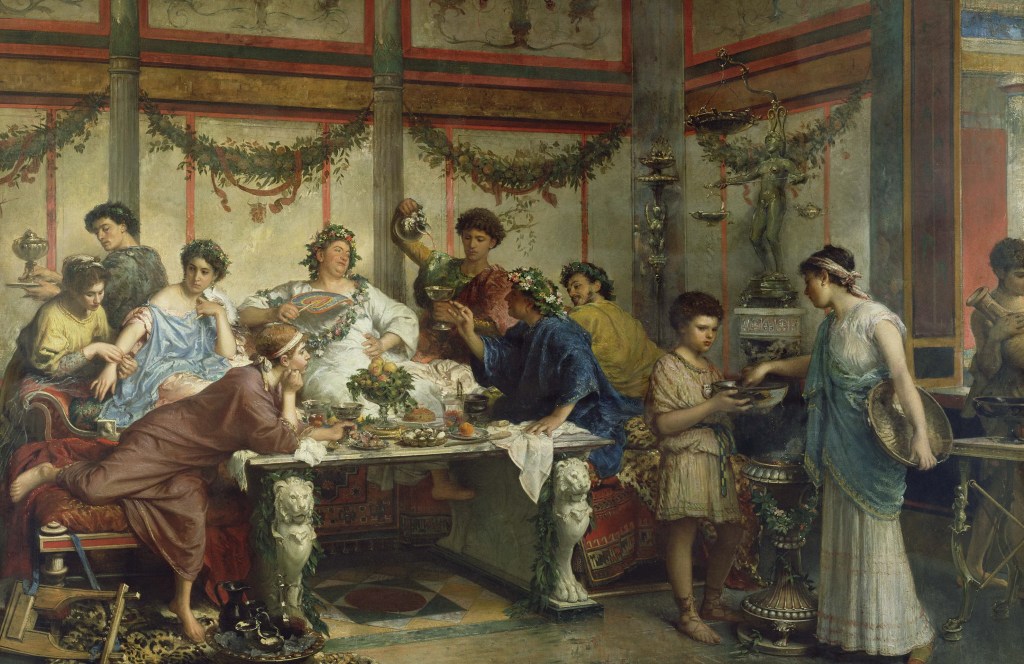
From Egypt and Babylon, the Christmas tradition began to spread to other pagan cultures throughout the world. The ancient Roman and Norse versions of Christmas were called Saturnalia and Yule.
Saturnalia
“The Ancient Romans had a special festival to celebrate midwinter and the Winter Solstice, called Saturnalia. The festival honoured the Roman god of agriculture, Saturn, and began on December 17th. Saturnalia originated as a farming celebration, marking the return of the sun and the promise of good crop growth in the new year. It soon developed into a week-long festival full of revelry.”
“During the weeklong festivities, Roman norms were suspended in favour of eating, drinking, gift-giving and partying. All social norms are inverted: there was no business, drunkenness and gambling were encouraged, slaves were allowed to eat and drink with their masters. Pleasure was the primary purpose of the festival, which seems to have been enjoyed by all the citizens of Rome. On December 17th, there was a public banquet for Saturn that marked the beginning of the festival. The statue of Saturn was released from his temple to show that during this period, Saturn was the King in Rome.“
Via: https://www.academuseducation.co.uk/post/saturnalia-the-history-and-traditions
Yule
“The Vikings (and other Scandinavian & Germanic people of this time) celebrated the Yuletide Festival for 12 days starting on December 25th. The festival was primarily a celebration of the re-awakening of nature brought on by the returning of the sun after the Winter Solstice.“
“During this time, the Norse god Odin would fly across the sky on his eight-legged horse, Sleipnir, delivering gifts to children (remind you of anyone?). The children would leave their boots by the fireplace (much like we do today with stockings) for Odin to pop the presents into.“
“Norse people believed that evergreen plants had magical properties that would protect them from the evil spirits that would come out at the darkest time of year. They hung branches of evergreen trees, holly, and mistletoe over their doors and windows as protection. During the Yule Festival, the Vikings would also decorate a “Yule Tree” with small statues of their gods, clothing, and food.“
Via: https://www.imagininghistory.co.uk/post/ancient-origins-of-the-christmas-tree
Notice how in Norse Mythology, Odin was nearly identical with Santa. A big, old man with a beard that rides across the sky in his chariot delivering gifts to men. Apollo also had a similar role in Greek mythology with his sun chariot.
krampus
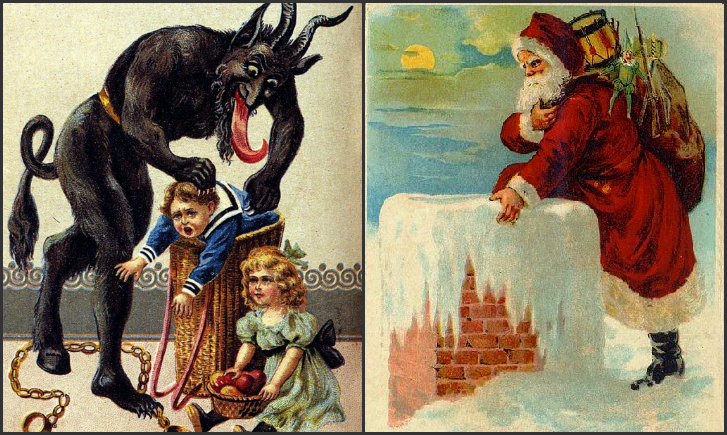
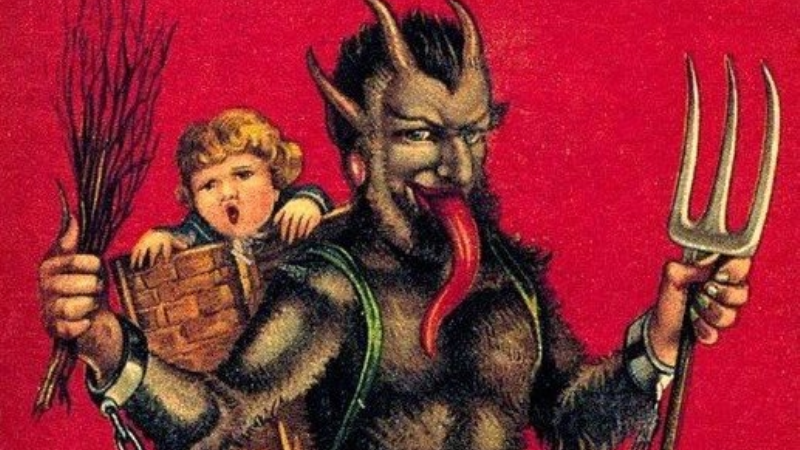
I also wanted to touch on two important characters in the Christmas mythology, Santa Claus and Krampus.
The father god of pagan religions always had two aspects, a light and dark side.
For example, in most versions of ancient Egyptian mythology, Osiris is the benevolent hero and Set is the malevolent antagonist. However, depending on the location in Egypt, as Egypt was split into two opposing kingdoms, sometimes the roles were reversed. This led to merging of the opposing aspects into one perfect being, and the idea that Set and Osiris, Good and Evil, were one in the same, two sides of the same coin.
The two “gods” of modern day Christmas are simply a reimaging of this ancient idea. We have Santa representing the benevolent aspect of the father god (think Osiris/Zeus), while Krampus represents the malevolent side of his personality (think Set/Hades).
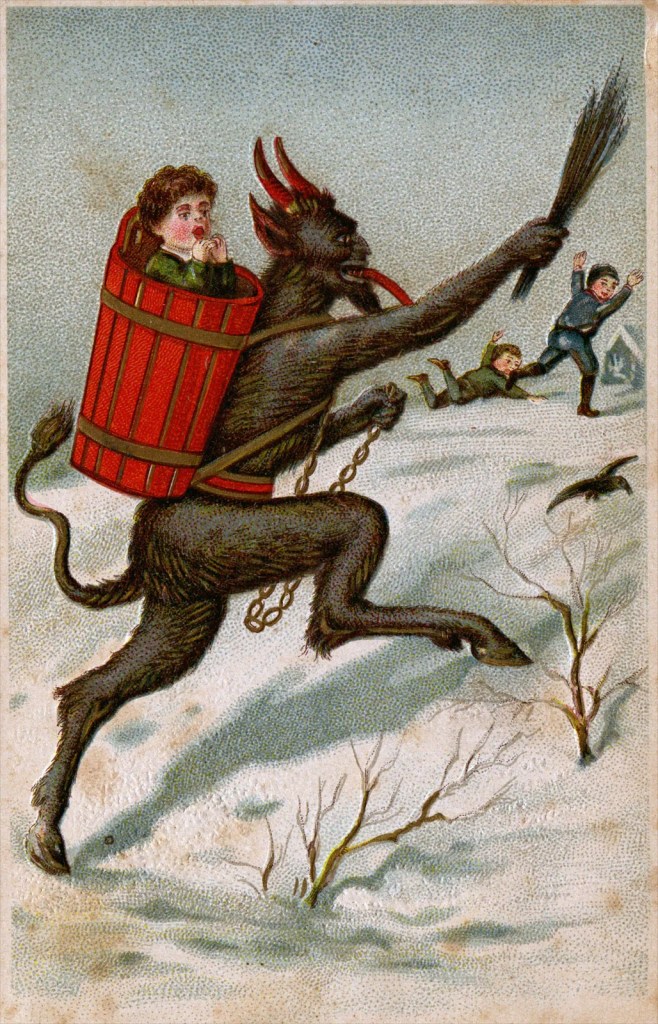
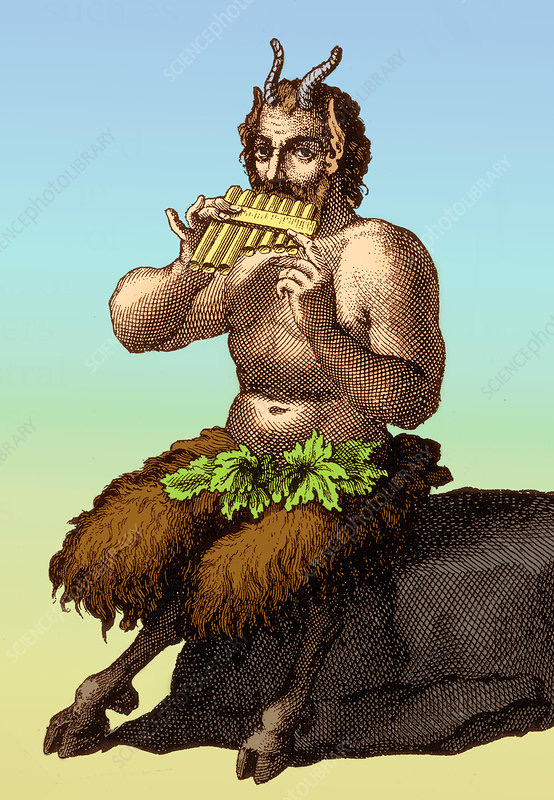
I’m sure you noticed the appearance of Krampus as well. It should seem extremely familiar. In pagan cultures, the supreme deity was always associated with the goat. This is why this term has become so popular in modern times. Check out Hollyweird Vol.1 for more information on this topic.

mixed and merged
Much of the merging of paganism and the Bible can be traced back to the Council of Nicaea, but just understand this basic point:
The Bible is INDEPENDENT of the church system.
We must stop associating the church with the Bible, because the church system is full of false teachers, perverted doctrines, and pharisees. Most of the church system has been infiltrated by pagans and luciferians, who just replaced the names of their pagan gods with biblical names. Instead of Isis, Osiris, and Horus, they say God, Mary, and Jesus, but it’s the same system of worship.
This is why it’s so important to READ THE BIBLE FOR YOURSELF!! You can’t rely on the church or other people to teach you about these things. You have to read the Bible for yourself so you know what it ACTUALLY says, and not other peoples’ interpretations. Once you do, you’ll be able to see through the false teachings and corrupt practices like the celebration of Christmas a biblical holiday.
“Evergreen trees were important fertility emblems for pre-Christian ceremonies marking the winter solstice. People from ancient societies believed that by decorating their homes and temples with evergreen plants, such as holly, ivy and mistletoe, they were helping to carry the diminished sun through a critical period. Mistletoe was the most sacred plant of the Druids and it was given great reverence because it grows on the venerated oak.”
“The custom of kissing under the mistletoe comes from the ancient idea that mistletoe is the oak’s genitals. And so it was believed that an embrace under its glistening berries was sure guarantee of a fruitful union. The decoration of Christmas trees is a survival of pagan tree veneration. For centuries before Christianity, holly was used for celebrating their midwinter Saturnalia.“
Via: Mike Ford in, “So you Plan to Keep Christmas Now?”
Ask yourself: Do you worship the creature or the Creator?
I don’t want my people to continue to live in lies and deceit. Celebrate Christmas if you want. Enjoy time with your family, and spread love.
Just don’t continue the lie that Christmas is about Jesus…
Because it isn’t.
Also, if you’re going to celebrate Christmas as a biblical holiday, why not celebrate the ACTUAL biblical holidays like Passover or Purim?
Be consistent brothers. A double-minded man is unstable in all his ways. (James 1:8)
If you truly believe in the Bible, I would encourage you to do your own research and slowly move away from this wicked tradition.
If you’re still dependent on your parents, don’t worry about it! I just want to provide you with factual information, so when you’re independent and can make your own decisions, you have the strength and knowledge to find alternatives to this tradition of men.
I would also advise you to research the biblical holiday of Purim. It’s essentially Christmas, but better, and scripturally sound. There are many alternatives to celebrating Christmas, and you can still enjoy this time period.
Just make sure you’re doing it in the spirit of Christ instead of Saturn.
Bye chance.
references
https://www.imagininghistory.co.uk/post/ancient-origins-of-the-christmas-tree
https://www.history.com/topics/christmas/history-of-christmas.
https://www.history.com/topics/ancient-rome/saturnalia.
https://www.britannica.com/topic/Krampus.
https://www.nuorigins.com/understanding-the-winter-solstice-through-the-kamitic-lens/.
https://www.bibletools.org/index.cfm/fuseaction/Library.sr/CT/ARTB/k/500/syncretismas.htm
https://www.learnreligions.com/the-annunciation-of-the-lord-542461.
https://www.bibletools.org/index.cfm/fuseaction/topical.show/RTD/cgg/ID/504/Christmas-Tree.htm.
 by chance